

Construction Equipment Market Research Report: Growth Drivers & Forecast (2026-2032)
By Type of Equipment (Earthmoving Equipment (Excavators, Loaders, Bulldozers, Motor Graders, Skid Steer Loaders, Crawler Loaders, Trenchers, Dump Trucks, Others), Material Handling ... Equipment (Cranes, Forklifts, Telehandlers, Others), Road Construction Equipment (Road Rollers, Asphalt Pavers, Milling Machines, Others)); By Propulsion (Diesel, Gasoline (CNG, LPG), Electric); By Application (Residential Construction, Commercial Construction, Industrial Construction, Infrastructure (Roads & Highways), Mining, Utilities & Energy, Others); By Engine Capacity (Less than 5 L, 5–10 L, More than 10 L); By Power Output (Less than 100 HP, 101–200 HP, 201–400 HP, More than 400 HP), and others Read more
- Buildings, Construction, Metals & Mining
- Jul 2026
- Pages 340
- Report Format: PDF, Excel, PPT
Construction Equipment Market
Projected 3.17% CAGR from 2026 to 2032
Study Period
2026-2032
Market Size (2026)
USD 181.17 Billion
Market Size (2032)
USD 218.4 Billion
Largest Region
Asia Pacific
Projected CAGR
3.17%
Leading Segments
By Equipment Type: Earth Moving Equipment
Construction Equipment Market Key Takeaways
- The global construction equipment market is valued at USD 181.17 billion in 2025 and is projected to reach USD 218.4 billion by 2032, growing at a 3.17% CAGR during 2026–2032.
- Asia-Pacific is expected to dominate the market in 2026, accounting for approximately 44% market share.
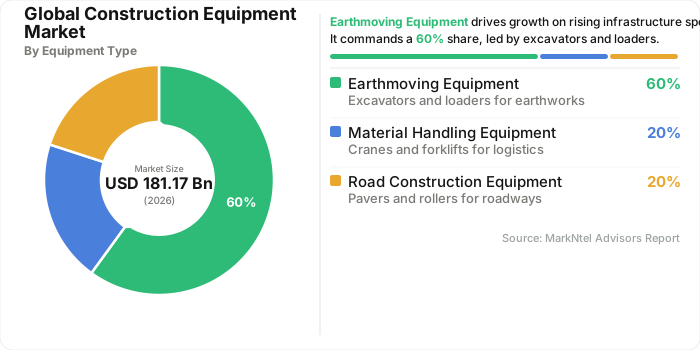
- By type of equipment, earthmoving equipment is anticipated to hold approximately 60% of the global market share in 2026.
- By propulsion, diesel-powered equipment is projected to account for nearly 86% of the global market in 2026.
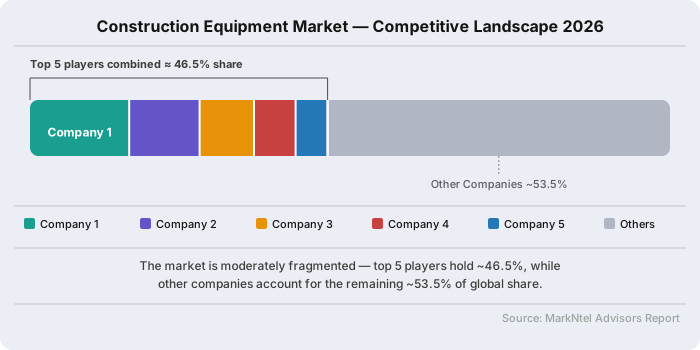
- The market remains moderately consolidated, with the top five manufacturers collectively accounting for approximately 46.5% market share.
Construction Equipment Market Size and Outlook
The global construction equipment market size was valued at USD 175.6 billion in 2025 and is projected to grow from USD 181.17 billion in 2026 to USD 218.4 billion by 2032. Along with this, the market is estimated to grow at a CAGR of around 3.17% during the forecast period, i.e., 2026-32.
The market outlook remains firmly anchored in sustained public infrastructure execution rather than short-term cyclical spending. In the United States, the Department of Transportation reports that Infrastructure Investment and Jobs Act funding had reached USD 378.0 billion in obligations, or 69.28% of enacted budget authority, as of February, 2026, with USD 224.9 billion already outlaid to recipients. This steady conversion of authorized funding into active construction contracts signals continued procurement of excavators, road-building machinery, and material-handling equipment across highway, bridge, and transit projects nationwide through the remainder of the forecast period.
Beyond North America, India's Union Budget for FY 2026-27 reinforces this trajectory with public capital expenditure raised nearly 9% to approximately USD 142 billion, alongside a newly introduced Scheme for Enhancement of Construction and Infrastructure Equipment, aimed explicitly at strengthening domestic manufacturing of high-value, technologically advanced machinery. This targeted policy signals that emerging economies are no longer just consuming imported equipment but actively building domestic production capacity, a structural shift that could reshape global supply chains and competitive dynamics within the construction equipment market over the coming years.
Taken together, these developments point toward a market whose growth is increasingly underwritten by coordinated public capital commitments across both developed and emerging economies, rather than isolated regional spending cycles. As governments convert budgeted infrastructure funding into executed contracts and simultaneously invest in domestic equipment manufacturing capability, demand for earthmoving, road construction, and material-handling machinery is likely to remain resilient, positioning the global construction equipment market for sustained, geographically diversified expansion through 2032.
Construction Equipment Market Key Indicators
- According to the U.S. Census Bureau, the value of U.S. construction spending reached approximately USD 2.20 trillion (seasonally adjusted annual rate) in May 2025. Higher construction expenditure increases procurement of earthmoving, road-building, and material-handling equipment across residential and non-residential projects.
- The U.S. Energy Information Administration (EIA) estimates global liquid fuel consumption will average approximately 104.1 million barrels per day in 2025. Sustained fuel availability supports continuous operation of diesel-powered heavy construction equipment across infrastructure and mining projects.
- According to the International Monetary Fund (IMF), emerging and developing economies are projected to grow by 4.1% in 2025. Faster economic growth in emerging markets accelerates infrastructure development, boosting demand for construction machinery.
- According to the U.S. Geological Survey (USGS), global copper mine production reached approximately 23 million metric tons in 2024, driven by infrastructure and electrification demand. Rising mining activity increases demand for excavators, wheel loaders, dump trucks, and other heavy earthmoving equipment.
Construction Equipment Market Scope
| Category | Segments |
|---|---|
| By Type of Equipment | Earthmoving Equipment (Excavators, Loaders, Bulldozers, Motor Graders, Skid Steer Loaders, Crawler Loaders, Trenchers, Dump Trucks, Others), Material Handling Equipment (Cranes, Forklifts, Telehandlers, Others), Road Construction Equipment (Road Rollers, Asphalt Pavers, Milling Machines, Others |
| By Propulsion | Diesel, Gasoline (CNG, LPG), Electric |
| By Application | Residential Construction, Commercial Construction, Industrial Construction, Infrastructure (Roads & Highways), Mining, Utilities & Energy, Others |
| By Engine Capacity | Less than 5 L, 5–10 L, More than 10 L); By Power Output (Less than 100 HP, 101–200 HP, 201–400 HP, More than 400 HP |
Construction Equipment Market Growth Drivers
Rising Government Infrastructure Investments Driving Sustained Demand for Construction Equipment Worldwide
Government-led investments in transportation, energy, water, and urban infrastructure are emerging as one of the primary growth drivers of the construction equipment industry. Expanding road networks, railway corridors, airports, ports, and public utility projects require extensive deployment of excavators, cranes, loaders, road construction machinery, and material handling equipment throughout the project lifecycle. According to the Organisation for Economic Co-operation and Development (OECD), global infrastructure investment requirements are projected to reach USD 6.9 trillion annually by 2040 to support economic growth, urbanization, and climate resilience. This sustained capital expenditure is creating long-term opportunities for equipment manufacturers as governments prioritize modernizing public infrastructure and strengthening national connectivity.
The growing pipeline of infrastructure projects is also encouraging manufacturers to expand product portfolios with machines designed for high-productivity applications. Supporting this trend, CASE Construction Equipment introduced its next-generation 580SV Construction King™ Center Pivot Backhoe Loader in March 2025, featuring improved hydraulic performance, enhanced operator controls, and upgraded fuel efficiency for infrastructure and utility construction projects. The product launch reflects manufacturers' focus on delivering equipment capable of meeting rising demand from large public infrastructure developments while improving operational efficiency, reducing project timelines, and supporting contractors executing increasingly complex construction activities across global markets.
Recent Trends
Accelerating Electrification of Construction Equipment Driving the Transition Toward Sustainable Heavy Machinery
Electrification is emerging as one of the most transformative trends in the construction equipment market as manufacturers accelerate the development of battery-powered machinery to support decarbonization goals and comply with increasingly stringent emissions regulations. Electric construction equipment offers lower operating costs, reduced noise levels, and zero tailpipe emissions, making it particularly suitable for urban infrastructure projects, indoor construction, tunneling, and environmentally sensitive worksites. Continuous improvements in battery technology, energy management systems, and charging solutions are enhancing machine productivity and operating hours, encouraging contractors to incorporate electric equipment into their fleets while supporting corporate sustainability commitments and regulatory compliance.
Reflecting this industry shift, Volvo Construction Equipment launched the A30 Electric and A40 Electric articulated haulers in February 2025, becoming the world's first manufacturer to commercially introduce battery-electric articulated haulers in their size class. The new models are designed to deliver performance comparable to conventional diesel-powered machines while significantly reducing carbon emissions and operational noise. This product launch demonstrates how leading manufacturers are investing in sustainable equipment innovation to meet evolving customer requirements, strengthen environmental performance, and accelerate the global transition toward cleaner and more efficient construction operations.
Construction Equipment Market Opportunities and Challenges
Skilled Operator Shortage Challenges, Driving Federal Investment in Workforce Training
The construction equipment industry faces a persistent operator shortage that limits how effectively growing machinery fleets can be utilized on jobsites. According to the U.S. Bureau of Labor Statistics, construction and extraction occupations are projected to generate approximately 649,300 job openings annually through 2034, driven by industry expansion and retiring workers. This shortage of qualified equipment operators and technicians leaves purchased and rented machinery underutilized, delaying fleet expansion decisions and constraining equipment sales despite strong underlying demand for excavators, loaders, and cranes across construction projects worldwide.
Addressing this gap, the U.S. Department of Labor awarded nearly USD 162 million through five cooperative agreements in 2026 to expand Registered Apprenticeship programs, training operators and technicians for equipment-intensive industries. A larger, better-trained operator base allows contractors to deploy existing and newly purchased machinery more fully, converting previously idle equipment capacity into active fleet utilization. This also accelerates adoption of higher-value, technology-enabled equipment, as trained operators are better positioned to use intelligent machine control and automation features, reinforcing sustained demand and replacement cycles across the global construction equipment market.
Segmentation Insights
Earthmoving Equipment Accounts for Approximately 60% Share, supported by Rising Infrastructure and Mining Activities
The segment's dominance is driven by its extensive application in excavation, grading, site preparation, material movement, mining, and large-scale infrastructure development. Excavators, loaders, bulldozers, and dump trucks remain indispensable across road, railway, airport, port, energy, and urban development projects because they improve productivity while reducing project completion time. Increasing public infrastructure expenditure and mining investments across both developed and emerging economies continue to sustain demand for high-capacity earthmoving machinery. According to the World Bank, infrastructure investment remains essential for supporting economic growth, urbanization, and resilient transport networks, reinforcing long-term equipment demand.
The market is also witnessing rapid technological advancement as manufacturers focus on automation, intelligent machine control, and connected equipment to improve operational efficiency. These innovations enable contractors to reduce fuel consumption, minimize rework, and optimize equipment utilization, making advanced earthmoving machinery increasingly attractive for large construction projects. Supporting this trend, Komatsu Ltd. introduced the PC220LCi-12 hydraulic excavator in January 2025, featuring Intelligent Machine Control (iMC) 3.0, automated grading assistance, payload monitoring, and enhanced digital connectivity for real-time jobsite management. The launch demonstrates how manufacturers are integrating smart technologies into earthmoving equipment to enhance productivity, improve precision, and strengthen the segment's leadership in the global construction equipment market. Based on the equipment type the, market is further bifurcated into:
- Earth Moving Equipment
- Material Handling Equipment
- Road Construction Equipment
Diesel Propulsion Holds Approximately 86% Share Due to Superior Performance in Heavy-Duty Applications
Diesel-powered equipment leads the construction equipment market in 2026, maintaining its leadership because of its superior power output, high torque, durability, and ability to operate continuously under demanding conditions. Heavy construction activities such as mining, quarrying, road building, and large infrastructure projects require equipment capable of delivering consistent performance over extended operating hours, making diesel engines the preferred propulsion technology. In addition, established global fuel distribution networks and faster refueling compared with battery charging support widespread diesel equipment deployment, particularly at remote construction and mining sites where charging infrastructure remains limited.
Although manufacturers continue investing in equipment electrification, diesel technology is evolving through improved fuel efficiency, lower emissions, and enhanced machine performance. These advancements allow contractors to reduce operating costs while complying with increasingly stringent environmental regulations. Reflecting this trend, Caterpillar Inc. introduced the Next Generation 330 UHD Ultra High Demolition Hydraulic Excavator in 2025, incorporating advanced hydraulic systems, improved fuel efficiency, and enhanced operator technologies for demanding demolition and infrastructure projects. The product launch highlights the industry's continued investment in modern diesel-powered equipment, ensuring reliable performance while supporting productivity improvements across large-scale construction applications worldwide. Based on the propulsion type, the market is further bifurcated into:
- Diesel
- Gasoline
- Electric
Construction Equipment Market Regional Analysis
Asia-Pacific is estimated to account for approximately 44% of the construction equipment market in 2026, supported by rapid infrastructure development, expanding urbanization, and the presence of leading construction equipment manufacturing hubs. China, Japan, South Korea, and India continue to generate significant demand for earthmoving, road construction, and material handling equipment owing to large-scale investments in transportation networks, industrial facilities, energy projects, and urban infrastructure. The region also benefits from a well-established manufacturing ecosystem, with globally recognized equipment manufacturers such as Komatsu, Hitachi Construction Machinery, Kubota, SANY, XCMG, and Zoomlion supporting high production capacity, technological innovation, and export competitiveness.
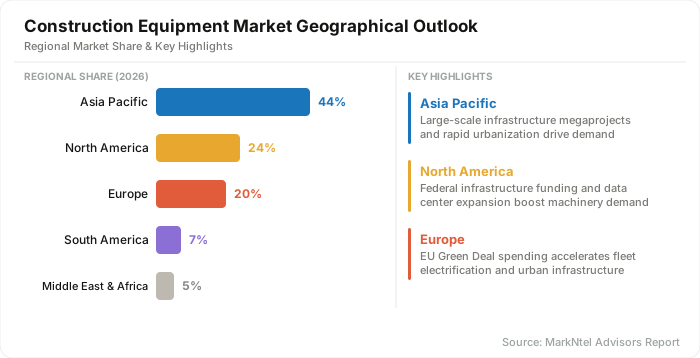
Beyond its manufacturing strength, Asia-Pacific continues to reinforce its market leadership through sustained public infrastructure investment and industrial expansion. According to the Asian Development Bank (ADB), developing Asia is expected to maintain solid economic growth of 4.9% in 2025, supporting continued investments in transport, logistics, utilities, and urban development projects that require heavy construction machinery. In addition, governments across the region continue to prioritize highways, rail corridors, airports, renewable energy facilities, and smart cities developments, creating sustained demand for advanced construction equipment. The combination of robust economic activity, expanding infrastructure investment, and continuous equipment innovation is expected to strengthen Asia-Pacific's dominant position in the global construction equipment market throughout the forecast period.
Construction Equipment Market Competitive Landscape
The top five companies, Caterpillar Inc., Komatsu Ltd., Deere & Company, XCMG Group, and SANY Group Co., Ltd., collectively account for approximately 46.5% of the construction equipment industry in 2026. Their leadership is supported by extensive global operations, diversified construction equipment portfolios, continuous product innovation, advanced technologies, and strong dealer and distribution networks, enabling them to maintain a significant competitive advantage across major international construction markets.
Key Companies in the Construction Equipment Market
- Caterpillar Inc.
- Komatsu Ltd.
- Deere & Company
- SANY Group Co., Ltd.
- XCMG Group
- Volvo Construction Equipment (AB Volvo)
- CNH Industrial N.V.
- Liebherr Group
- J C Bamford Excavators Ltd. (JCB)
- HD Hyundai Construction Equipment Co., Ltd.
- Terex Corporation
- Hitachi Construction Machinery Co., Ltd.
- Zoomlion Heavy Industry Science & Technology Co., Ltd.
- Kubota Corporation
- Doosan Bobcat Inc.
Construction Equipment Industry News and Recent Developments
January 2026: Volvo Construction Equipment Launches EC950 High Reach Demolition Excavator
In January 2026, Volvo Construction Equipment introduced the EC950 High Reach, the largest demolition excavator in its portfolio. Designed for large-scale urban demolition projects, the machine offers a maximum pin height of 49 meters (161 feet) and an operating weight exceeding 180 tonnes (approximately 397,000 pounds). The excavator incorporates a modular boom system, enhanced stability, and advanced operator safety technologies to improve efficiency in high-rise demolition applications.
Impact Analysis: The launch strengthens the global market for specialized demolition equipment as infrastructure renewal and urban redevelopment projects continue to expand. It also reflects manufacturers' increasing emphasis on safety, productivity, and application-specific machinery capable of handling complex demolition operations.
January 2026: CASE Construction Equipment Unveils Electric Mini Track Loader
CASE Construction Equipment introduced its first electric Mini Track Loader during CONEXPO-CON/AGG 2026. The battery-electric machine is designed for indoor construction, landscaping, utility installation, and urban projects where low noise and zero tailpipe emissions are required. The launch formed part of CASE's showcase of nearly 20 new or upgraded machines.
Impact Analysis: The introduction highlights the industry's transition toward electrified compact equipment, driven by tightening emissions regulations and growing demand for sustainable construction solutions. Electric compact equipment is expected to gain wider adoption in urban infrastructure and indoor construction environments.
January 2026: Komatsu Launches PC220LCi-12 Intelligent Machine Control Excavator
Komatsu unveiled the PC220LCi-12 hydraulic excavator equipped with Intelligent Machine Control (iMC) 3.0 technology. The system delivers automated grading assistance, payload monitoring, lift control, and enhanced connectivity for real-time project management, improving earthmoving precision while reducing rework.
Impact Analysis: The product launch reinforces the industry's shift toward intelligent construction equipment. Integrated machine control technologies improve jobsite productivity, optimize fuel consumption, and support digital construction workflows, accelerating demand for connected heavy equipment globally.
January 2026: HD Construction Equipment Introduces DEVELON DX400 Smart Excavator
HD Construction Equipment launched the DEVELON DX400 Smart Excavator, featuring AI-powered pedestrian detection, collision avoidance technology, and improved engine performance. Compared with the previous generation, the excavator delivers approximately 21% higher output and 22% better fuel efficiency, supporting safer and more efficient earthmoving operations.
Impact Analysis: The launch demonstrates increasing investment in AI-enabled heavy equipment that improves operator safety and lowers operating costs. Smart excavators are expected to experience stronger demand as contractors prioritize productivity, fuel efficiency, and digital jobsite management.
Frequently Asked Questions
- Market Segmentation
- Introduction
- Product Definition
- Research Process
- Assumptions
- Executive Summary
- Construction Equipment Production (Thousand Units) Trend 2022-2032
- Construction Equipment Production (Thousand Units) Trend by Type of Equipment
- Earthmoving Equipment
- Material Handling Equipment
- Road Construction Equipment
- Company Wise Production Plants and Statistics
- Installed Production Capacity
- Actual Production
- Planned Production Target
- Construction Equipment Production (Thousand Units) Trend by Type of Equipment
- Construction Equipment Pricing Analysis 2022-2032
- Construction Equipment Pricing Trend (USD/Units) 2022-2032
- Construction Equipment Pricing Trend (USD/Units) By Regions 2022-2032
- North America
- South America
- Europe
- Middle East & Africa
- Asia Pacific
- Construction Equipment Pricing Trend (USD/Units) Type of Equipment
- Earthmoving Equipment
- Material Handling Equipment
- Road Construction Equipment
- Construction Equipment Supply Chain Analysis
- Construction Equipment Import & Export Data Analysis
- Construction Equipment Market Policies, Regulations, and Product Standards
- Construction Equipment Market Trends & Developments
- Construction Equipment Market Dynamics
- Growth Factors
- Challenges
- Construction Equipment Market Hotspot & Opportunities
- Construction Equipment Market Outlook, 2022-2032
- Market Size & Outlook
- By Revenues (USD Million)
- By Unit Sold (Thousand Units)
- Market Segmentation & outlook
- By Type of Equipment- Market Size & Forecast 2022-2032, USD Million & Thousand Units
- Earthmoving Equipment
- Excavators
- Loaders
- Bulldozers
- Motor Graders
- Skid Steer Loaders
- Crawler Loaders
- Trenchers
- Dump Trucks
- Others
- Material Handling Equipment
- Cranes
- Forklifts
- Telehandlers
- Others
- Road Construction Equipment
- Road Rollers
- Asphalt Pavers
- Milling Machines
- Others
- Earthmoving Equipment
- By Propulsion- Market Size & Forecast 2022-2032, USD Million & Thousand Units
- Diesel
- Gasoline
- CNG
- LPG
- Electric
- By Application- Market Size & Forecast 2022-2032, USD Million & Thousand Units
- Residential Construction
- Commercial Construction
- Industrial Construction
- Infrastructure (Roads & Highways)
- Mining
- Utilities & Energy
- Others
- By Engine Capacity- Market Size & Forecast 2022-2032, USD Million & Thousand Units
- <5 L
- 5–10 L
- 10 L
- By Power Output- Market Size & Forecast 2022-2032, USD Million & Thousand Units
- <100 HP
- 101–200 HP
- 201–400 HP
- 400 HP
- By Region - Market Size & Forecast 2022-2032, USD Million & Thousand Units
- North America
- South America
- Europe
- Middle East & Africa
- Asia-Pacific
- By Type of Equipment- Market Size & Forecast 2022-2032, USD Million & Thousand Units
- Market Size & Outlook
- North America Construction Equipment Market Outlook, 2022-2032
- Market Size & Outlook
- By Revenues (USD Million)
- By Unit Sold (Thousand Units)
- Market Segmentation & outlook
- By Type of Equipment- Market Size & Forecast 2022-2032, USD Million & Thousand Units
- By Propulsion- Market Size & Forecast 2022-2032, USD Million & Thousand Units
- By Application- Market Size & Forecast 2022-2032, USD Million & Thousand Units
- By Engine Capacity- Market Size & Forecast 2022-2032, USD Million & Thousand Units
- By Country
- The US
- Canada
- Mexico
- The US Construction Equipment Market Outlook, 2022-2032
- Market Size & Outlook
- By Revenues (USD Million)
- By Unit Sold (Thousand Units)
- Market Segmentation & outlook
- By Type of Equipment- Market Size & Forecast 2022-2032, USD Million & Thousand Units
- By Propulsion- Market Size & Forecast 2022-2032, USD Million & Thousand Units
- By Application- Market Size & Forecast 2022-2032, USD Million & Thousand Units
- By Engine Capacity- Market Size & Forecast 2022-2032, USD Million & Thousand Units
- Market Size & Outlook
- Canada Construction Equipment Market Outlook, 2022-2032
- Market Size & Outlook
- By Revenues (USD Million)
- By Unit Sold (Thousand Units)
- Market Segmentation & outlook
- By Type of Equipment- Market Size & Forecast 2022-2032, USD Million & Thousand Units
- By Propulsion- Market Size & Forecast 2022-2032, USD Million & Thousand Units
- By Application- Market Size & Forecast 2022-2032, USD Million & Thousand Units
- By Engine Capacity- Market Size & Forecast 2022-2032, USD Million & Thousand Units
- Market Size & Outlook
- Mexico Construction Equipment Market Outlook, 2022-2032
- Market Size & Outlook
- By Revenues (USD Million)
- By Unit Sold (Thousand Units)
- Market Segmentation & outlook
- By Type of Equipment- Market Size & Forecast 2022-2032, USD Million & Thousand Units
- By Propulsion- Market Size & Forecast 2022-2032, USD Million & Thousand Units
- By Application- Market Size & Forecast 2022-2032, USD Million & Thousand Units
- By Engine Capacity- Market Size & Forecast 2022-2032, USD Million & Thousand Units
- Market Size & Outlook
- Market Size & Outlook
- South America Construction Equipment Market Outlook, 2022-2032
- Market Size & Outlook
- By Revenues (USD Million)
- By Unit Sold (Thousand Units)
- Market Segmentation & outlook
- By Type of Equipment- Market Size & Forecast 2022-2032, USD Million & Thousand Units
- By Propulsion- Market Size & Forecast 2022-2032, USD Million & Thousand Units
- By Application- Market Size & Forecast 2022-2032, USD Million & Thousand Units
- By Engine Capacity- Market Size & Forecast 2022-2032, USD Million & Thousand Units
- By Country
- Brazil
- Argentina
- Chile
- Colombia
- Peru
- Ecuador
- Rest of South America
- Brazil Construction Equipment Market Outlook, 2022-2032
- Market Size & Outlook
- By Revenues (USD Million)
- By Unit Sold (Thousand Units)
- Market Segmentation & outlook
- By Type of Equipment- Market Size & Forecast 2022-2032, USD Million & Thousand Units
- By Propulsion- Market Size & Forecast 2022-2032, USD Million & Thousand Units
- By Application- Market Size & Forecast 2022-2032, USD Million & Thousand Units
- By Engine Capacity- Market Size & Forecast 2022-2032, USD Million & Thousand Units
- Market Size & Outlook
- Argentina Construction Equipment Market Outlook, 2022-2032
- Market Size & Outlook
- By Revenues (USD Million)
- By Unit Sold (Thousand Units)
- Market Segmentation & outlook
- By Type of Equipment- Market Size & Forecast 2022-2032, USD Million & Thousand Units
- By Propulsion- Market Size & Forecast 2022-2032, USD Million & Thousand Units
- By Application- Market Size & Forecast 2022-2032, USD Million & Thousand Units
- By Engine Capacity- Market Size & Forecast 2022-2032, USD Million & Thousand Units
- Market Size & Outlook
- Chile Construction Equipment Market Outlook, 2022-2032
- Market Size & Outlook
- By Revenues (USD Million)
- By Unit Sold (Thousand Units)
- Market Segmentation & outlook
- By Type of Equipment- Market Size & Forecast 2022-2032, USD Million & Thousand Units
- By Propulsion- Market Size & Forecast 2022-2032, USD Million & Thousand Units
- By Application- Market Size & Forecast 2022-2032, USD Million & Thousand Units
- By Engine Capacity- Market Size & Forecast 2022-2032, USD Million & Thousand Units
- Market Size & Outlook
- Colombia Construction Equipment Market Outlook, 2022-2032
- Market Size & Outlook
- By Revenues (USD Million)
- By Unit Sold (Thousand Units)
- Market Segmentation & outlook
- By Type of Equipment- Market Size & Forecast 2022-2032, USD Million & Thousand Units
- By Propulsion- Market Size & Forecast 2022-2032, USD Million & Thousand Units
- By Application- Market Size & Forecast 2022-2032, USD Million & Thousand Units
- By Engine Capacity- Market Size & Forecast 2022-2032, USD Million & Thousand Units
- Market Size & Outlook
- Peru Construction Equipment Market Outlook, 2022-2032
- Market Size & Outlook
- By Revenues (USD Million)
- By Unit Sold (Thousand Units)
- Market Segmentation & outlook
- By Type of Equipment- Market Size & Forecast 2022-2032, USD Million & Thousand Units
- By Propulsion- Market Size & Forecast 2022-2032, USD Million & Thousand Units
- By Application- Market Size & Forecast 2022-2032, USD Million & Thousand Units
- By Engine Capacity- Market Size & Forecast 2022-2032, USD Million & Thousand Units
- Market Size & Outlook
- Ecuador Construction Equipment Market Outlook, 2022-2032
- Market Size & Outlook
- By Revenues (USD Million)
- By Unit Sold (Thousand Units)
- Market Segmentation & outlook
- By Type of Equipment- Market Size & Forecast 2022-2032, USD Million & Thousand Units
- By Propulsion- Market Size & Forecast 2022-2032, USD Million & Thousand Units
- By Application- Market Size & Forecast 2022-2032, USD Million & Thousand Units
- By Engine Capacity- Market Size & Forecast 2022-2032, USD Million & Thousand Units
- Market Size & Outlook
- Market Size & Outlook
- Europe Construction Equipment Market Outlook, 2022-2032
- Market Size & Outlook
- By Revenues (USD Million)
- By Unit Sold (Thousand Units)
- Market Segmentation & outlook
- By Type of Equipment- Market Size & Forecast 2022-2032, USD Million & Thousand Units
- By Propulsion- Market Size & Forecast 2022-2032, USD Million & Thousand Units
- By Application- Market Size & Forecast 2022-2032, USD Million & Thousand Units
- By Engine Capacity- Market Size & Forecast 2022-2032, USD Million & Thousand Units
- By Country
- The UK
- Germany
- France
- Italy
- Spain
- Nordic
- Benelux
- Rest of Europe
- The UK Construction Equipment Market Outlook, 2022-2032
- Market Size & Outlook
- By Revenues (USD Million)
- By Unit Sold (Thousand Units)
- Market Segmentation & outlook
- By Type of Equipment- Market Size & Forecast 2022-2032, USD Million & Thousand Units
- By Propulsion- Market Size & Forecast 2022-2032, USD Million & Thousand Units
- By Application- Market Size & Forecast 2022-2032, USD Million & Thousand Units
- By Engine Capacity- Market Size & Forecast 2022-2032, USD Million & Thousand Units
- Market Size & Outlook
- Germany Construction Equipment Market Outlook, 2022-2032
- Market Size & Outlook
- By Revenues (USD Million)
- By Unit Sold (Thousand Units)
- Market Segmentation & outlook
- By Type of Equipment- Market Size & Forecast 2022-2032, USD Million & Thousand Units
- By Propulsion- Market Size & Forecast 2022-2032, USD Million & Thousand Units
- By Application- Market Size & Forecast 2022-2032, USD Million & Thousand Units
- By Engine Capacity- Market Size & Forecast 2022-2032, USD Million & Thousand Units
- Market Size & Outlook
- France Construction Equipment Market Outlook, 2022-2032
- Market Size & Outlook
- By Revenues (USD Million)
- By Unit Sold (Thousand Units)
- Market Segmentation & outlook
- By Type of Equipment- Market Size & Forecast 2022-2032, USD Million & Thousand Units
- By Propulsion- Market Size & Forecast 2022-2032, USD Million & Thousand Units
- By Application- Market Size & Forecast 2022-2032, USD Million & Thousand Units
- By Engine Capacity- Market Size & Forecast 2022-2032, USD Million & Thousand Units
- Market Size & Outlook
- Italy Construction Equipment Market Outlook, 2022-2032
- Market Size & Outlook
- By Revenues (USD Million)
- By Unit Sold (Thousand Units)
- Market Segmentation & outlook
- By Type of Equipment- Market Size & Forecast 2022-2032, USD Million & Thousand Units
- By Propulsion- Market Size & Forecast 2022-2032, USD Million & Thousand Units
- By Application- Market Size & Forecast 2022-2032, USD Million & Thousand Units
- By Engine Capacity- Market Size & Forecast 2022-2032, USD Million & Thousand Units
- Market Size & Outlook
- Spain Construction Equipment Market Outlook, 2022-2032
- Market Size & Outlook
- By Revenues (USD Million)
- By Unit Sold (Thousand Units)
- Market Segmentation & outlook
- By Type of Equipment- Market Size & Forecast 2022-2032, USD Million & Thousand Units
- By Propulsion- Market Size & Forecast 2022-2032, USD Million & Thousand Units
- By Application- Market Size & Forecast 2022-2032, USD Million & Thousand Units
- By Engine Capacity- Market Size & Forecast 2022-2032, USD Million & Thousand Units
- Market Size & Outlook
- Nordic Construction Equipment Market Outlook, 2022-2032
- Market Size & Outlook
- By Revenues (USD Million)
- By Unit Sold (Thousand Units)
- Market Segmentation & outlook
- By Type of Equipment- Market Size & Forecast 2022-2032, USD Million & Thousand Units
- By Propulsion- Market Size & Forecast 2022-2032, USD Million & Thousand Units
- By Application- Market Size & Forecast 2022-2032, USD Million & Thousand Units
- By Engine Capacity- Market Size & Forecast 2022-2032, USD Million & Thousand Units
- Market Size & Outlook
- Benelux Construction Equipment Market Outlook, 2022-2032
- Market Size & Outlook
- By Revenues (USD Million)
- By Unit Sold (Thousand Units)
- Market Segmentation & outlook
- By Type of Equipment- Market Size & Forecast 2022-2032, USD Million & Thousand Units
- By Propulsion- Market Size & Forecast 2022-2032, USD Million & Thousand Units
- By Application- Market Size & Forecast 2022-2032, USD Million & Thousand Units
- By Engine Capacity- Market Size & Forecast 2022-2032, USD Million & Thousand Units
- Market Size & Outlook
- Market Size & Outlook
- Middle East Construction Equipment Market Outlook, 2022-2032
- Market Size & Outlook
- By Revenues (USD Million)
- By Unit Sold (Thousand Units)
- Market Segmentation & outlook
- By Type of Equipment- Market Size & Forecast 2022-2032, USD Million & Thousand Units
- By Propulsion- Market Size & Forecast 2022-2032, USD Million & Thousand Units
- By Application- Market Size & Forecast 2022-2032, USD Million & Thousand Units
- By Engine Capacity- Market Size & Forecast 2022-2032, USD Million & Thousand Units
- By Country
- Saudi Arabia
- The UAE
- South Africa
- Egypt
- Qatar
- Kuwait
- Oman
- Nigeria
- Saudi Arabia Construction Equipment Market Outlook, 2022-2032
- Market Size & Outlook
- By Revenues (USD Million)
- By Unit Sold (Thousand Units)
- Market Segmentation & outlook
- By Type of Equipment- Market Size & Forecast 2022-2032, USD Million & Thousand Units
- By Propulsion- Market Size & Forecast 2022-2032, USD Million & Thousand Units
- By Application- Market Size & Forecast 2022-2032, USD Million & Thousand Units
- By Engine Capacity- Market Size & Forecast 2022-2032, USD Million & Thousand Units
- Market Size & Outlook
- The UAE Construction Equipment Market Outlook, 2022-2032
- Market Size & Outlook
- By Revenues (USD Million)
- By Unit Sold (Thousand Units)
- Market Segmentation & outlook
- By Type of Equipment- Market Size & Forecast 2022-2032, USD Million & Thousand Units
- By Propulsion- Market Size & Forecast 2022-2032, USD Million & Thousand Units
- By Application- Market Size & Forecast 2022-2032, USD Million & Thousand Units
- By Engine Capacity- Market Size & Forecast 2022-2032, USD Million & Thousand Units
- Market Size & Outlook
- South Africa Construction Equipment Market Outlook, 2022-2032
- Market Size & Outlook
- By Revenues (USD Million)
- By Unit Sold (Thousand Units)
- Market Segmentation & outlook
- By Type of Equipment- Market Size & Forecast 2022-2032, USD Million & Thousand Units
- By Propulsion- Market Size & Forecast 2022-2032, USD Million & Thousand Units
- By Application- Market Size & Forecast 2022-2032, USD Million & Thousand Units
- By Engine Capacity- Market Size & Forecast 2022-2032, USD Million & Thousand Units
- Market Size & Outlook
- Egypt Construction Equipment Market Outlook, 2022-2032
- Market Size & Outlook
- By Revenues (USD Million)
- By Unit Sold (Thousand Units)
- Market Segmentation & outlook
- By Type of Equipment- Market Size & Forecast 2022-2032, USD Million & Thousand Units
- By Propulsion- Market Size & Forecast 2022-2032, USD Million & Thousand Units
- By Application- Market Size & Forecast 2022-2032, USD Million & Thousand Units
- By Engine Capacity- Market Size & Forecast 2022-2032, USD Million & Thousand Units
- Market Size & Outlook
- Qatar Construction Equipment Market Outlook, 2022-2032
- Market Size & Outlook
- By Revenues (USD Million)
- By Unit Sold (Thousand Units)
- Market Segmentation & outlook
- By Type of Equipment- Market Size & Forecast 2022-2032, USD Million & Thousand Units
- By Propulsion- Market Size & Forecast 2022-2032, USD Million & Thousand Units
- By Application- Market Size & Forecast 2022-2032, USD Million & Thousand Units
- By Engine Capacity- Market Size & Forecast 2022-2032, USD Million & Thousand Units
- Market Size & Outlook
- Kuwait Construction Equipment Market Outlook, 2022-2032
- Market Size & Outlook
- By Revenues (USD Million)
- By Unit Sold (Thousand Units)
- Market Segmentation & outlook
- By Type of Equipment- Market Size & Forecast 2022-2032, USD Million & Thousand Units
- By Propulsion- Market Size & Forecast 2022-2032, USD Million & Thousand Units
- By Application- Market Size & Forecast 2022-2032, USD Million & Thousand Units
- By Engine Capacity- Market Size & Forecast 2022-2032, USD Million & Thousand Units
- Market Size & Outlook
- Oman Construction Equipment Market Outlook, 2022-2032
- Market Size & Outlook
- By Revenues (USD Million)
- By Unit Sold (Thousand Units)
- Market Segmentation & outlook
- By Type of Equipment- Market Size & Forecast 2022-2032, USD Million & Thousand Units
- By Propulsion- Market Size & Forecast 2022-2032, USD Million & Thousand Units
- By Application- Market Size & Forecast 2022-2032, USD Million & Thousand Units
- By Engine Capacity- Market Size & Forecast 2022-2032, USD Million & Thousand Units
- Market Size & Outlook
- Nigeria Construction Equipment Market Outlook, 2022-2032
- Market Size & Outlook
- By Revenues (USD Million)
- By Unit Sold (Thousand Units)
- Market Segmentation & outlook
- By Type of Equipment- Market Size & Forecast 2022-2032, USD Million & Thousand Units
- By Propulsion- Market Size & Forecast 2022-2032, USD Million & Thousand Units
- By Application- Market Size & Forecast 2022-2032, USD Million & Thousand Units
- By Engine Capacity- Market Size & Forecast 2022-2032, USD Million & Thousand Units
- Market Size & Outlook
- Market Size & Outlook
- Asia Pacific Construction Equipment Market Outlook, 2022-2032
- Market Size & Outlook
- By Revenues (USD Million)
- By Unit Sold (Thousand Units)
- Market Segmentation & outlook
- By Type of Equipment- Market Size & Forecast 2022-2032, USD Million & Thousand Units
- By Propulsion- Market Size & Forecast 2022-2032, USD Million & Thousand Units
- By Application- Market Size & Forecast 2022-2032, USD Million & Thousand Units
- By Engine Capacity- Market Size & Forecast 2022-2032, USD Million & Thousand Units
- By Country
- China
- Japan
- India
- South Korea
- Australia
- Indonesia
- Thailand
- Vietnam
- New Zealand
- Rest of Asia-Pacific
- China Construction Equipment Market Outlook, 2022-2032
- Market Size & Outlook
- By Revenues (USD Million)
- By Unit Sold (Thousand Units)
- Market Segmentation & outlook
- By Type of Equipment- Market Size & Forecast 2022-2032, USD Million & Thousand Units
- By Propulsion- Market Size & Forecast 2022-2032, USD Million & Thousand Units
- By Application- Market Size & Forecast 2022-2032, USD Million & Thousand Units
- By Engine Capacity- Market Size & Forecast 2022-2032, USD Million & Thousand Units
- Market Size & Outlook
- Japan Construction Equipment Market Outlook, 2022-2032
- Market Size & Outlook
- By Revenues (USD Million)
- By Unit Sold (Thousand Units)
- Market Segmentation & outlook
- By Type of Equipment- Market Size & Forecast 2022-2032, USD Million & Thousand Units
- By Propulsion- Market Size & Forecast 2022-2032, USD Million & Thousand Units
- By Application- Market Size & Forecast 2022-2032, USD Million & Thousand Units
- By Engine Capacity- Market Size & Forecast 2022-2032, USD Million & Thousand Units
- Market Size & Outlook
- India Construction Equipment Market Outlook, 2022-2032
- Market Size & Outlook
- By Revenues (USD Million)
- By Unit Sold (Thousand Units)
- Market Segmentation & outlook
- By Type of Equipment- Market Size & Forecast 2022-2032, USD Million & Thousand Units
- By Propulsion- Market Size & Forecast 2022-2032, USD Million & Thousand Units
- By Application- Market Size & Forecast 2022-2032, USD Million & Thousand Units
- By Engine Capacity- Market Size & Forecast 2022-2032, USD Million & Thousand Units
- Market Size & Outlook
- South Korea Construction Equipment Market Outlook, 2022-2032
- Market Size & Outlook
- By Revenues (USD Million)
- By Unit Sold (Thousand Units)
- Market Segmentation & outlook
- By Type of Equipment- Market Size & Forecast 2022-2032, USD Million & Thousand Units
- By Propulsion- Market Size & Forecast 2022-2032, USD Million & Thousand Units
- By Application- Market Size & Forecast 2022-2032, USD Million & Thousand Units
- By Engine Capacity- Market Size & Forecast 2022-2032, USD Million & Thousand Units
- Market Size & Outlook
- Australia Construction Equipment Market Outlook, 2022-2032
- Market Size & Outlook
- By Revenues (USD Million)
- By Unit Sold (Thousand Units)
- Market Segmentation & outlook
- By Type of Equipment- Market Size & Forecast 2022-2032, USD Million & Thousand Units
- By Propulsion- Market Size & Forecast 2022-2032, USD Million & Thousand Units
- By Application- Market Size & Forecast 2022-2032, USD Million & Thousand Units
- By Engine Capacity- Market Size & Forecast 2022-2032, USD Million & Thousand Units
- Market Size & Outlook
- Indonesia Construction Equipment Market Outlook, 2022-2032
- Market Size & Outlook
- By Revenues (USD Million)
- By Unit Sold (Thousand Units)
- Market Segmentation & outlook
- By Type of Equipment- Market Size & Forecast 2022-2032, USD Million & Thousand Units
- By Propulsion- Market Size & Forecast 2022-2032, USD Million & Thousand Units
- By Application- Market Size & Forecast 2022-2032, USD Million & Thousand Units
- By Engine Capacity- Market Size & Forecast 2022-2032, USD Million & Thousand Units
- Market Size & Outlook
- Thailand Construction Equipment Market Outlook, 2022-2032
- Market Size & Outlook
- By Revenues (USD Million)
- By Unit Sold (Thousand Units)
- Market Segmentation & outlook
- By Type of Equipment- Market Size & Forecast 2022-2032, USD Million & Thousand Units
- By Propulsion- Market Size & Forecast 2022-2032, USD Million & Thousand Units
- By Application- Market Size & Forecast 2022-2032, USD Million & Thousand Units
- By Engine Capacity- Market Size & Forecast 2022-2032, USD Million & Thousand Units
- Market Size & Outlook
- Vietnam Construction Equipment Market Outlook, 2022-2032
- Market Size & Outlook
- By Revenues (USD Million)
- By Unit Sold (Thousand Units)
- Market Segmentation & outlook
- By Type of Equipment- Market Size & Forecast 2022-2032, USD Million & Thousand Units
- By Propulsion- Market Size & Forecast 2022-2032, USD Million & Thousand Units
- By Application- Market Size & Forecast 2022-2032, USD Million & Thousand Units
- By Engine Capacity- Market Size & Forecast 2022-2032, USD Million & Thousand Units
- Market Size & Outlook
- New Zealand Construction Equipment Market Outlook, 2022-2032
- Market Size & Outlook
- By Revenues (USD Million)
- By Unit Sold (Thousand Units)
- Market Segmentation & outlook
- By Type of Equipment- Market Size & Forecast 2022-2032, USD Million & Thousand Units
- By Propulsion- Market Size & Forecast 2022-2032, USD Million & Thousand Units
- By Application- Market Size & Forecast 2022-2032, USD Million & Thousand Units
- By Engine Capacity- Market Size & Forecast 2022-2032, USD Million & Thousand Units
- Market Size & Outlook
- Market Size & Outlook
- Construction Equipment Market Key Strategic Imperatives for Success & Growth
- Competitive Outlook
- Company Profiles
- Caterpillar Inc.
- Business Description
- Product Portfolio
- Collaborations & Alliances
- Recent Developments
- Financial Details
- Others
- Komatsu Ltd.
- Business Description
- Product Portfolio
- Collaborations & Alliances
- Recent Developments
- Financial Details
- Others
- Deere & Company
- Business Description
- Product Portfolio
- Collaborations & Alliances
- Recent Developments
- Financial Details
- Others
- SANY Group Co., Ltd.
- Business Description
- Product Portfolio
- Collaborations & Alliances
- Recent Developments
- Financial Details
- Others
- XCMG Group
- Business Description
- Product Portfolio
- Collaborations & Alliances
- Recent Developments
- Financial Details
- Others
- Volvo Construction Equipment (AB Volvo)
- Business Description
- Product Portfolio
- Collaborations & Alliances
- Recent Developments
- Financial Details
- Others
- CNH Industrial N.V.
- Business Description
- Product Portfolio
- Collaborations & Alliances
- Recent Developments
- Financial Details
- Others
- Liebherr Group
- Business Description
- Product Portfolio
- Collaborations & Alliances
- Recent Developments
- Financial Details
- Others
- J C Bamford Excavators Ltd. (JCB)
- Business Description
- Product Portfolio
- Collaborations & Alliances
- Recent Developments
- Financial Details
- Others
- HD Hyundai Construction Equipment Co., Ltd.
- Business Description
- Product Portfolio
- Collaborations & Alliances
- Recent Developments
- Financial Details
- Others
- Terex Corporation
- Business Description
- Product Portfolio
- Collaborations & Alliances
- Recent Developments
- Financial Details
- Others
- Hitachi Construction Machinery Co., Ltd.
- Business Description
- Product Portfolio
- Collaborations & Alliances
- Recent Developments
- Financial Details
- Others
- Zoomlion Heavy Industry Science & Technology Co., Ltd.
- Business Description
- Product Portfolio
- Collaborations & Alliances
- Recent Developments
- Financial Details
- Others
- Kubota Corporation
- Business Description
- Product Portfolio
- Collaborations & Alliances
- Recent Developments
- Financial Details
- Others
- Others
- Caterpillar Inc.
- Company Profiles
- Disclaimer
MarkNtel Advisors follows a robust and iterative research methodology designed to ensure maximum accuracy and minimize deviation in market estimates and forecasts. Our approach combines both bottom-up and top-down techniques to effectively segment and quantify various aspects of the market. A consistent feature across all our research reports is data triangulation, which examines the market from three distinct perspectives to validate findings. Key components of our research process include:
1. Scope & Research Design At the outset, MarkNtel Advisors define the research objectives and formulate pertinent questions. This phase involves determining the type of research—qualitative or quantitative—and designing a methodology that outlines data collection methods, target demographics, and analytical tools. They also establish timelines and budgets to ensure the research aligns with client goals.
2. Sample Selection and Data Collection In this stage, the firm identifies the target audience and determines the appropriate sample size to ensure representativeness. They employ various sampling methods, such as random or stratified sampling, based on the research objectives. Data collection is carried out using tools like surveys, interviews, and observations, ensuring the gathered data is reliable and relevant.
3. Data Analysis and Validation Once data is collected, MarkNtel Advisors undertake a rigorous analysis process. This includes cleaning the data to remove inconsistencies, employing statistical software for quantitative analysis, and thematic analysis for qualitative data. Validation steps are taken to ensure the accuracy and reliability of the findings, minimizing biases and errors.

4. Data Forecast and FinalizationThe final phase involves forecasting future market trends based on the analyzed data. MarkNtel Advisors utilize predictive modeling and time series analysis to anticipate market behaviors. The insights are then compiled into comprehensive reports, featuring visual aids like charts and graphs, and include strategic recommendations to inform client decision-making
We offer flexible licensing options to cater to varying organizational needs. Choose the pricing pack that best suits your requirements:
Buy Now Inquire Before Buying
 Request Customization
 Talk to our Consultant







